
8 min read
July Festivities in Peru
May 27
July tends to be a great month for traveling around Peru. During these days, many cities fill up with flags, music in the streets, processions, dances, food fairs, school parades, and civic ceremonies. It’s not unusual to find a different celebration depending on where you go. For those who want to take a closer look at the country, these festivities help you better understand its history, its beliefs, and the way each community holds on to its own traditions.
In this post we’ll walk you through the main celebrations in July in Peru, when they take place, and what’s behind each one. We’ll also share some tips for experiencing them as a visitor, respectfully and without missing what matters most. Rather than just listing dates, the idea is to show you why July carries so much cultural weight and what you can expect if you travel during this month.
Why Is July an Ideal Month to Visit Peru?
July’s festivities carry special value because they combine national celebrations, patron saint festivals, Andean traditions, tourist activities, and cultural events across different regions. On top of that, July coincides with peak tourist season in several Peruvian destinations, especially Cusco, Lima, Arequipa, Puno, and other places where the weather tends to be favorable for exploring plazas, historic centers, markets, museums, and nature trails.
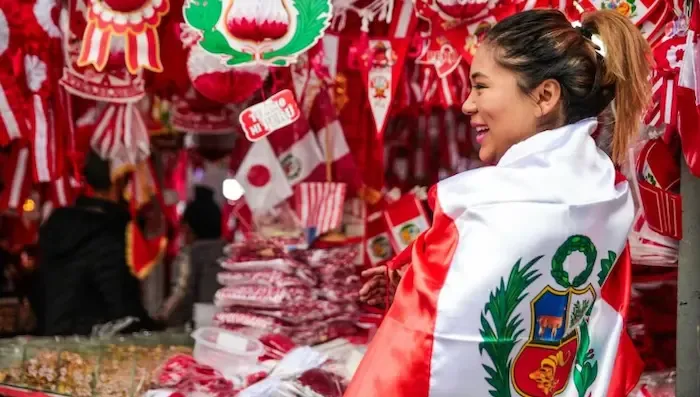
During this month, many cities get ready to welcome visitors from Peru and abroad. Streets are decorated in red and white, restaurants serve traditional dishes, plazas host cultural activities, and families come together to celebrate Peruvian identity. That’s why July’s festivities shouldn’t be seen simply as dates on a calendar, but as an invitation to experience Peru through its traditions.
Main festivities celebrated in Peru in July
Below, we present the month’s most representative celebrations. Some are national holidays, while others are regional festivities with major cultural significance. All of them are part of the festive spirit that makes July such an appealing month to visit the country.
Peruvian Air Force Day
July 23 marks Peruvian Air Force Day. This date is a national holiday and is tied to honoring Peru’s air force institution. According to the official Peruvian government calendar, July 23 is listed as a national holiday for Peruvian Air Force Day.
It’s celebrated to honor the history, service, and sacrifice of those who form part of the Peruvian Air Force. It’s also a date that recalls the courage of José Abelardo Quiñones, regarded as a symbol of patriotism and bravery. Although it’s not as major a tourist celebration as Fiestas Patrias, it is part of the civic atmosphere that characterizes the month.
Among July’s festivities, this date helps build up the patriotic spirit that intensifies toward July 28 and 29. Schools, public institutions, and official spaces often hold commemorative ceremonies, flag-raising events, formal ceremonies, and tributes to the Armed Forces.
How Can You Celebrate or Experience This Date?
As a visitor, you can use this day to learn more about Peru’s military and republican history. In Lima, for instance, some cultural venues, museums, or civic activities can bring you closer to the country’s historical memory. It’s also a good opportunity to walk through the main plazas, watch public ceremonies, and understand how Peru honors its national heroes.
If you’re traveling with family, this date can be a great introduction to talking about Peruvian history before the Fiestas Patrias celebrations begin. And since it’s a national holiday, many Peruvians take the chance to rest, travel, or kick off trips within the country.
Virgen del Carmen de Paucartambo
One of Peru’s most famous July festivities is the Feast of the Virgen del Carmen de Paucartambo, in Cusco. This celebration usually runs from July 15 to 18, with July 16 as the main day. The Virgen del Carmen, affectionately known as “Mamacha Carmen,” is deeply venerated by locals and devotees who travel in from all over the country and the world.
The festivity is held in honor of the Virgen del Carmen, patron saint of Paucartambo. Its importance isn’t just religious but also cultural, as it brings together traditional dances, troupes, music, masks, traditional costumes, and rituals that represent the area’s Andean and mestizo history. Dancing characters such as the Qhapaq Qolla, Qhapaq Negro, Saqras, and other groups fill the streets with color and symbolism.
This celebration shows how Catholic faith blended with local Andean traditions, creating a one-of-a-kind festival. For many devotees, taking part in the festival is a way to give thanks, ask for protection, and keep family memory alive. For visitors, it’s an intense experience that reveals the spiritual and artistic side of the most traditional Cusco.
What Happens During the Festival?
During these days, there are masses, processions, troupe entrances, dance performances, community gatherings, and symbolic activities. The streets of Paucartambo turn into a living stage, where every dance carries meaning. It’s not just about dancing: each character represents a story, a social critique, a devotion, or a collective memory.
Among the most anticipated activities are the procession of the Virgin, the dances in honor of the Mamacha Carmen, the presence of traditional troupes, and the visit to the cemetery, where the deceased are remembered. There’s also a strong sense of reunion, since many people born in Paucartambo return to take part in the festival. The official platform Peru.info highlights that this celebration brings together troupes, dances, chants in Quechua, and traditional rituals unique to the area.
Peru’s Fiestas Patrias
Fiestas Patrias are the most important July festivities at the national level. They’re celebrated every July 28 and 29 and commemorate Peru’s independence. July 28 marks the proclamation of independence made by José de San Martín in 1821, while July 29 is dedicated to honoring the Armed Forces and the National Police of Peru.
They’re celebrated because they represent the birth of Peru as an independent republic. These are days to remember the nation’s history, value freedom, acknowledge the country’s challenges, and celebrate everything that makes up Peruvian identity: its people, its culture, its food, its landscapes, its languages, its traditions, and its diversity.
Hotels in San Isidro
become an excellent option for staying close to restaurants, main avenues, and strategic spots from which to better enjoy the city during the celebrations.
What Happens on July 28?
July 28 is the central day of independence. In Lima and other cities, official ceremonies, flag-raising events, speeches, solemn masses, and cultural activities take place. It’s also common for families to prepare or enjoy traditional dishes like ceviche, lomo saltado, anticuchos, causa limeña, ají de gallina, pachamanca, or rotisserie chicken.
For visitors, this day is perfect for exploring historic centers, attending food fairs, watching cultural shows, and trying Peruvian cuisine at its most festive. July’s festivities give gastronomy a special role, since eating Peruvian dishes is also a way of celebrating the homeland.
What Happens on July 29?
July 29 traditionally features the Grand Military Parade in Lima, along with similar activities in other cities. This date honors the Armed Forces and the National Police of Peru. Many families follow the parade on television or head to public spaces to watch the ceremonies, bands, delegations, and displays of institutional discipline.
For tourists, July 29 offers a very visible expression of national pride. That said, it’s worth checking routes, street closures, and schedules, especially in Lima, since some areas may see large crowds.
How to Celebrate Fiestas Patrias If You’re Visiting Peru
Among all of July’s festivities, Fiestas Patrias is the most recommended for anyone wanting to feel Peruvian pride across the whole country. Whether you’re in Lima, Cusco, Arequipa, Trujillo, Piura, Puno, or Iquitos, you’ll find a different way to celebrate everywhere you go.
The Feast of Santiago Apóstol is celebrated on July 25 in various communities across Peru, especially in Andean areas where patron saint traditions dedicated to this saint exist. Although it’s not a national holiday, it’s part of July’s festivities that carry great local value, especially in towns where the patron saint festival brings together processions, music, dances, masses, and community activities.
It’s celebrated in honor of Santiago Apóstol, a religious figure tied to Catholic tradition. In the Peruvian Andes, this festivity has taken on its own character, blending religious devotion with local customs. In some areas, the celebration is also linked to the agricultural calendar, community life, and each town’s identity.
These patron saint festivals are usually organized by mayordomos, devoted families, local authorities, and entire communities. The celebration carries not only religious meaning but also social significance: it allows families to reunite, lets visitors get to know the local culture, and helps pass traditions on to new generations.
Recommendations for traveling to Peru in July
Traveling during July’s festivities can be a wonderful experience, but it also requires some planning. July is a month of high tourist demand, especially because of Fiestas Patrias and the travel season to Cusco and other destinations. Book accommodation, transportation, and tours in advance, especially if you’re planning to visit Paucartambo, Machu Picchu, Lima, Arequipa, or Andean destinations.
If you take part in processions or religious festivities, remember that not everything is a tourist spectacle. Many people are living out an act of faith. Keep your distance when needed, avoid blocking the path of dancers or religious images, and ask before filming or taking close-up photos.
What to Eat During July’s Celebrations?
Food is an essential part of July’s festivities. During Fiestas Patrias, many restaurants and fairs offer iconic dishes like anticuchos, picarones, tamales, arroz con pato, rocoto relleno, adobo, cuy chactado, juane, pachamanca, and traditional desserts. You’ll also find drinks like chicha morada, emoliente, pisco sour, or regional beverages.
In Cusco and Paucartambo, the culinary experience can include Andean dishes, soups, breads, meats, corn, native potatoes, and hot drinks to fight off the cold. Eating during these dates isn’t just about food, it’s about taking part in a cultural celebration where every dish tells a story.
Conclusion
July has something special in Peru. During these days, the country moves between history, faith, and the urge to celebrate. There are more solemn ceremonies, like Peruvian Air Force Day, and festivities that fill the streets with music, color, and devotion, like the Virgen del Carmen de Paucartambo. On top of that come the Fiestas Patrias, felt almost everywhere, from the plazas to family tables.
Traveling through Peru in July means encountering a festive atmosphere that isn’t put on just for visitors, it comes from the people themselves. You’ll see decorated streets, bands playing, dances passed down through the years, and food that’s part of each place’s memory. Every celebration has its own meaning, and that’s why it’s worth experiencing it at a relaxed pace.
By Diego Ramos — May 26, 2026